AI Can Cut Food Waste. Who Gets the Savings?
Learning about Japan’s supermarkets, with a few concerns acquired in the American lunch aisle.
I have found the same pinwheel wraps at 7-Eleven and Giant Food. Same packaging, same supplier and distribution information on the back. I checked.
I had changed stores, but lunch had not.
There is something faintly insulting about a supermarket with an entire prepared-food department offering the same bland wrap I could pick up at a convenience store. All that space, all those ingredients nearby, and somehow we have arrived at the same tightly rolled disappointment.
This is the kind of baggage I bring to reading about Japanese retail. Alongside learning the language and preparing for my first visit, I have started looking at how stores work: what they make, how they decide what to carry, and what technology is changing behind the scenes. I am excited to discover things I have never considered. I am also old enough to recognize a familiar sales pitch in a different setting.
Recently, I came across AEON Retail’s use of AI to plan food production and markdowns. Better forecasts, less waste, easier decisions for employees. There is plenty there to welcome.
But I keep coming back to a question that the promise of efficiency rarely answers on its own: who gets the savings?
The promise is worth taking seriously
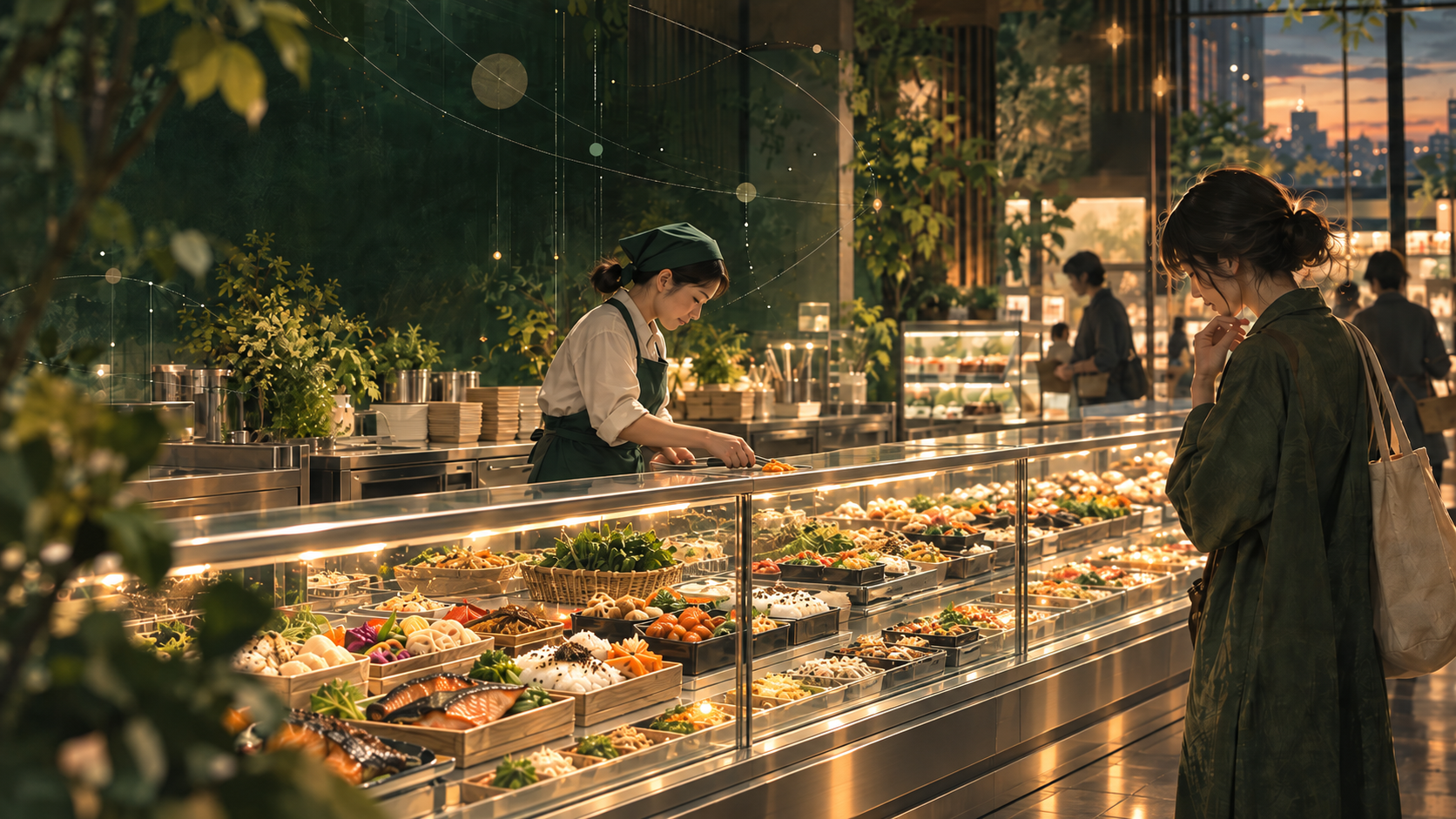
AEON’s AI Order recommends production and ordering quantities, while AI Kakaku helps determine when food should be discounted and by how much. The company describes using sales history, weather, and remaining stock, and says its markdown system was introduced in 2021. [1] www.aeonretail.jp
For a manager trying to balance ingredients, staffing, and a budget, that could be a considerable relief. Making too much means watching food and money go into the bin. Making too little leaves customers disappointed and employees fielding complaints about something they cannot magically produce at closing time.
One manager in AEON’s account describes adjusting production recommendations when they do not fit the ingredients available. The same account reports less uncertainty for inexperienced employees making markdown decisions. [1] That sounds useful: the system provides a starting point, and the people doing the work still have something to contribute. www.aeonretail.jp
I would happily take that kind of help seriously. Nobody benefits from a beautifully stocked display whose contents are destined for the trash.
What I resist is the leap from “we can run this department better” to “we can take more out of it.” A business could use better planning to support an affordable meal, give employees a less frantic shift, or make a seasonal dish viable. It could also reduce discounts, cut paid hours, and narrow the menu until very little remains that might surprise the forecast.
Those are choices. Putting AI between the decision and the person affected does not make them inevitable.
Dinner is not a willingness-to-pay experiment
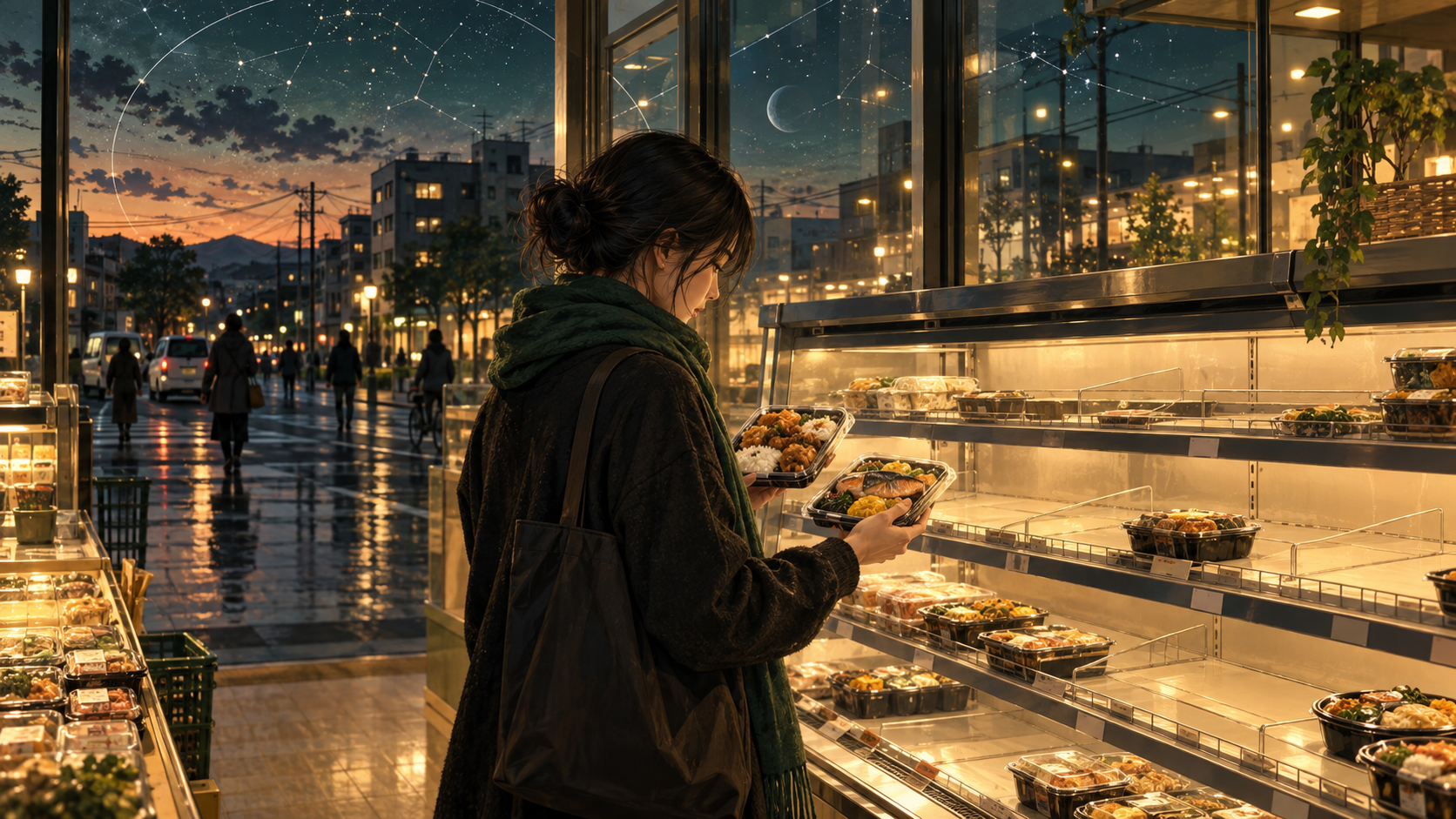
Think about the shopper who goes late because that is when dinner becomes affordable. They may depend on the markdown shelf without ever describing it that way. It is simply where they go after work, where they know their money will stretch.
Better forecasting might leave fewer meals to discount. That is a good reason to plan another source of value: a dependable meal deal, an evening promotion, a reasonably priced dish that remains available. The surplus can disappear without taking affordable dinner with it.
Unless, of course, keeping dinner affordable was never part of the objective.
Imagine a meal that used to drop from eight dollars to five. A pricing model recommends six because it predicts the remaining stock will still sell. It does. The store earns another dollar, and the customer has one less.
The purchase tells us they paid. It tells us very little about the choice they had.
Maybe the next store requires a bus. Maybe they have children waiting or twenty minutes between obligations. Maybe cooking tonight is beyond what they have left in them. A retailer studying how an area responds to higher prices can discover those limits without knowing anyone’s name.
That is why “we don’t personalize prices” does not settle the question for me. A whole neighborhood can have limited alternatives. Treating its continued purchases as permission to charge more risks turning necessity into an advantage for the seller.
AEON’s published account describes markdowns on remaining food; it does not establish that the company is exploiting customers in this way. [1] My objection is to the pricing logic itself. Being able to predict what people will tolerate does not give a retailer a moral claim to every additional dollar. www.aeonretail.jp
I want a fair price for the meal. I do not want a more accurate calculation of how inconvenient it would be for me to refuse it.
We already understand pumpkin spice

My pinwheel-wrap investigation was hardly a major consumer exposé. Still, it captured something I find dispiriting about American prepared food: the distance between having plenty of products and having an interesting choice.
Central kitchens and shared suppliers can lower costs and handle work an individual store cannot. But when their convenience starts defining the whole menu, a store gradually loses its own reasons to be visited. The food becomes interchangeable. Eventually, the best thing you can say about lunch is that it was available.
AI could accelerate that sameness if predictable volume and easy production become the dominant measures of success. A less popular dish is removed. Then another. Each deletion looks sensible on its own, until the remaining selection says very little about the people living nearby.
Consider gochujang chicken wings in a neighborhood with a Korean community. A lower sales ranking might deserve investigation. It should not end the discussion. Who comes for them? What else do those customers buy? Is this one of the few places nearby offering that flavor? Those questions can change the decision.
There is also the ordinary pleasure of something new, or something returning. We do not need an AI model to explain why people go back to Starbucks for pumpkin spice. We have all survived the annual announcement. Some of us have dressed for it.
Retailers understand anticipation perfectly well when they can sell us autumn in a cup. Surely lunch is allowed a little seasonal ambition.
Reading about Japan has given me examples worth following. In May 2025, Lawson announced a collaboration with Hokkaido’s Kinoko Okoku, including a mushroom rice ball offered at selected stores with its in-store cooking service. [2] A large chain was making regional food part of its offer. www.lawson.co.jp
That is where better forecasting becomes genuinely interesting to me. Could it help stores produce smaller batches, manage seasonal ingredients, and give a local variation a chance? A new favorite has to exist before it can produce an impressive sales history.
We should ask technology to make that experimentation more manageable. Otherwise, we risk becoming exceptionally good at supplying things nobody is particularly pleased to eat.
The person making it should have a say
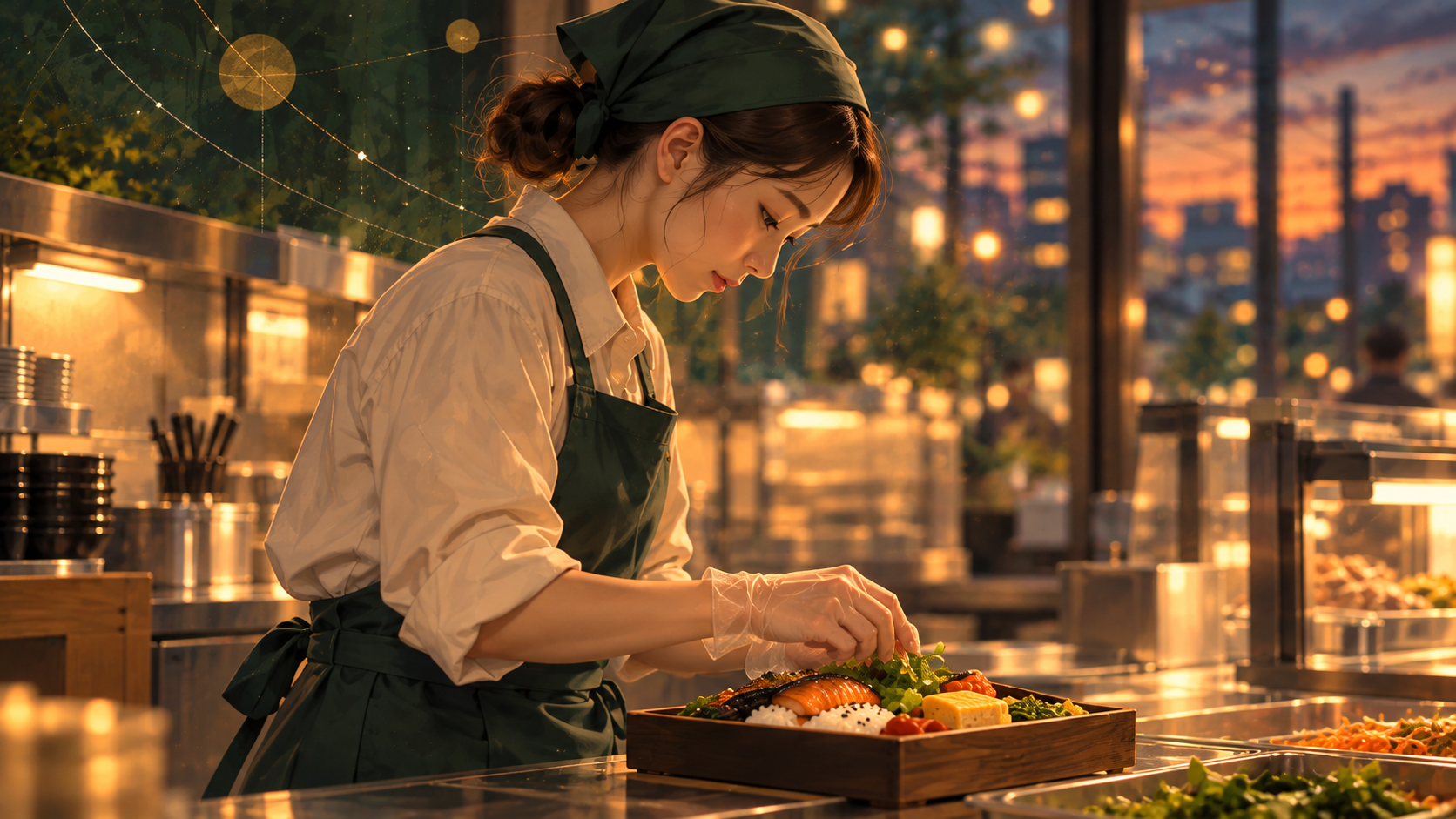
A store leader, owner, or regional manager needs real authority to respond to local preferences. That includes keeping existing dishes and developing variations the team can reasonably prepare. Someone who knows the neighborhood should be able to explain why a recommendation misses something and have that explanation affect the outcome.
The danger with AI is how easily its recommendation can acquire an authority the reasoning does not deserve. “The system says” closes the conversation. Yet people decided what it would reward, which information it would use, and what would count as an acceptable tradeoff. They remain responsible for those decisions.
There is a cost to taking judgment out of food preparation that will not necessarily appear in a waste report. Knowing a regular’s favorite, adjusting a recipe, finding a sensible use for ingredients: these can be the parts of a shift that make someone feel good at their job.
A kitchen planning chicken across several dishes is using knowledge as well as arithmetic. In Japan, I would be curious about how something like oyakodon, a chicken-and-egg rice bowl, fits into that planning within the kitchen’s preparation and food-safety rules. The details will vary. The opportunity is to support someone’s ability to make good use of what they have.
And when the technology saves time, some of that time should reach the employee.
It could mean more careful preparation, time to teach a colleague, or a shift that no longer feels permanently behind. Cut a position instead, and the remaining team still has to absorb the unexpected rush, the absence, and the customer who needs help. The planning improves while the people become more exhausted.
I am tired of that being described as making their lives easier. Employees have bills and families. Their paid hours are part of how dinner gets bought, too.
A warning I’m bringing, not a conclusion I’ve reached

I began by wondering whether Japan was ahead of the United States in these tools. The examples do not provide a clean ranking. AEON’s markdown system has been in use for years. In October 2025, Afresh reported completing a fresh replenishment rollout across Albertsons’ fresh departments, following a partnership that began in 2022. [3] These are related but different applications, and adoption dates tell us little about who benefits. www.afresh.com
Japan also has a national food-loss agenda. In 2025, the government set a target to reduce business-related food loss by 60 percent by fiscal 2030 compared with fiscal 2000. [4] That gives the technology a wider context, although a waste target cannot answer questions about wages, affordable meals, or local choice. www.maff.go.jp
My American experience has made me suspicious of improvements that leave everyone outside the financial results feeling poorer. That is the warning I bring to this research. I have not established that Japanese retailers are following the same path, and I am interested in discovering where they do things differently.
The useful comparisons will be specific. How much can a store leader decide? How are regional dishes supported? What happens to the hours saved? Those answers will require listening to workers and shoppers as well as reading company announcements.
When I visit Japan, I will undoubtedly spend too long looking at food and too little time understanding the labels. But alongside the novelty, I will be paying attention to the evening shelves, the prices, and the differences between neighborhoods. Eventually, with enough Japanese, I hope to ask someone about the work behind them.
My opinion does not need to wait until then. Retailers should use AI to reduce waste while preserving jobs, appealing choices, and affordable food. Better planning ought to leave a manager less strained, an employee with room to contribute, and a customer with something good to take home.
If AI helps a store waste less, the people making and buying dinner should have something to show for it.
References
AEON Retail. (2025, August 28). Using AI to reduce food loss. Japanese; title translated. Company account of AI Order, AI Kakaku, and employee judgment.
Lawson. (2025, May). Hokkaido collaboration with Kinoko Okoku: chilled soba and rice balls made with Hokkaido mushrooms. Japanese; title translated.
Afresh. (2025, October 23). Afresh completes AI-powered fresh replenishment and inventory management solution roll out across all Albertsons Companies fresh departments.
Ministry of Agriculture, Forestry and Fisheries, Japan. (2025). Annual Report on Food, Agriculture and Rural Areas: Reducing the food industry’s environmental impact and promoting consumer understanding. Japanese.