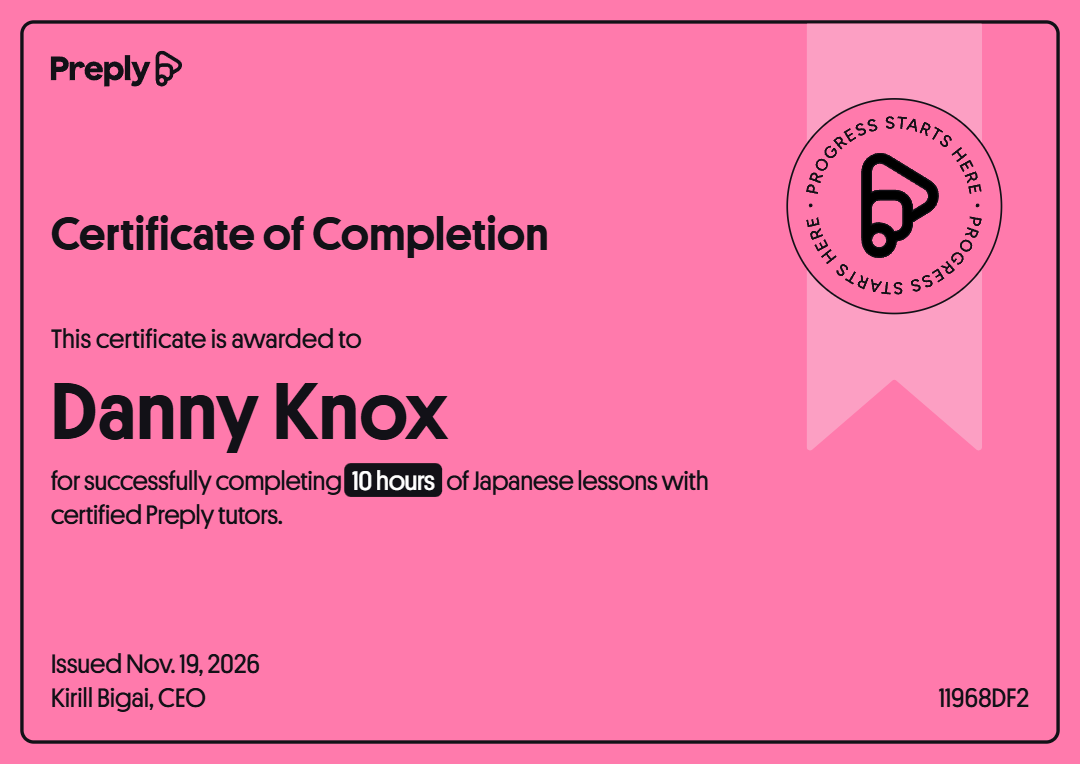
This week I got a very pink certificate for ten hours of Japanese lessons with Akiko. Around the same time, I crossed 250 hours of studying Japanese. I’m really proud of that. I’ve never learned this much in another language before. There are things I can read now that would’ve looked like a solid block of text to me in July. I can write a few sentences about my day and sometimes keep going long enough to tell a little story. I’m having a lot of fun.
I also cried after getting stuck trying to talk about my weekend.
I know how it sounds to put those things next to each other. But that’s about as accurate a picture of the last couple of months as I can give you. I’m enjoying myself enough to spend a ridiculous amount of my free time doing this, and I can be incredibly hard on myself in the middle of it. Sometimes I surprise myself with what comes out of my mouth. Other times I spend the rest of the evening thinking of all the things that could’ve come out of my mouth if I’d remembered a single goddamn verb.
The first time somebody asked me a question
I started with Akiko at the end of September, about 120 hours in. In our first lesson, she asked what time I’d woken up that day. I knew how to say “I get up.” I needed “I got up.” That little change from okimasu to okimashita took up a surprisingly large amount of my brain.
Then we talked about breakfast. Then lunch. I asked for help when I got stuck, and at some point I even asked her a question of my own. I came out of that lesson so excited. I’d spent a lot of those first 120 hours listening, repeating, reading, writing, and answering a recording. Here was a person who could hear my answer and ask me something else based on what I’d said. I loved that. I also wanted to be able to do so much more of it immediately.
Since then I’ve put in another 130 hours, including those ten with Akiko, more Pimsleur and Duolingo, pieces of Genki, flashcards, and whatever I was curious enough to turn into homework that week. Ten hours of tutoring is a small part of that number. It’s also where I get to find out what happens when I try to use the rest of it with somebody who has questions of her own.
Why the weekend got to me
Around the time I hit these milestones, I took a Japanese assessment and could read almost the whole thing. I remember feeling like the words were finally starting to stick. I could get through a sentence and understand it as a sentence, and that felt huge. I’d worked hard for that. I was excited to see it happening.
Around the same time, Akiko asked about my weekend. I got about as far as work and studying. There were words on the lesson slides I didn’t know, and I kept losing my train of thought while I was trying to answer. I’d be halfway to a sentence in my head, something would interrupt that thought, and then I’d have to go back and find it again. After a while, I was frustrated enough that even the words I knew were hard to reach.
That’s the part that made me cry. I could feel how much I knew when I had the assessment in front of me. Then there I was, trying to talk about my own life, and all I could seem to tell her was that I worked and studied. I wanted to say something that sounded like me. I wanted to be able to finish a thought and hear what she said back. I’d put enough time in that some part of me expected to be able to do that by now, and in the moment I was embarrassed by how hard it still was.
I’ve had lessons where I got off the call thinking, More came out today. I’ve written almost exactly that in my notes. I’ve had a rough day at work and finished a lesson in a better mood because we laughed and I managed to say something I hadn’t planned. The weekend lesson hit hard precisely because I’d had enough of those good ones to know how much I wanted another.
I’m the guy who makes his homework cute
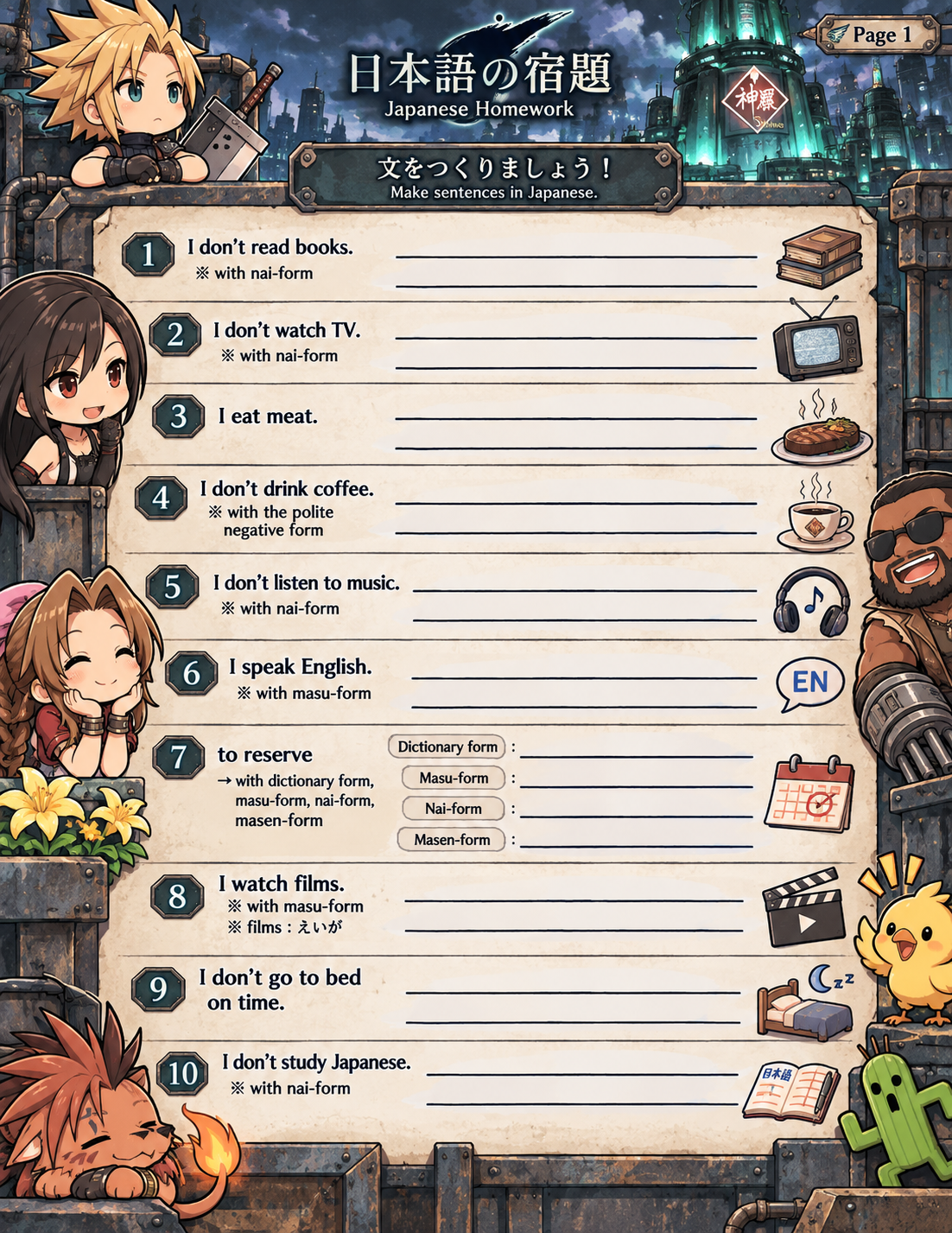
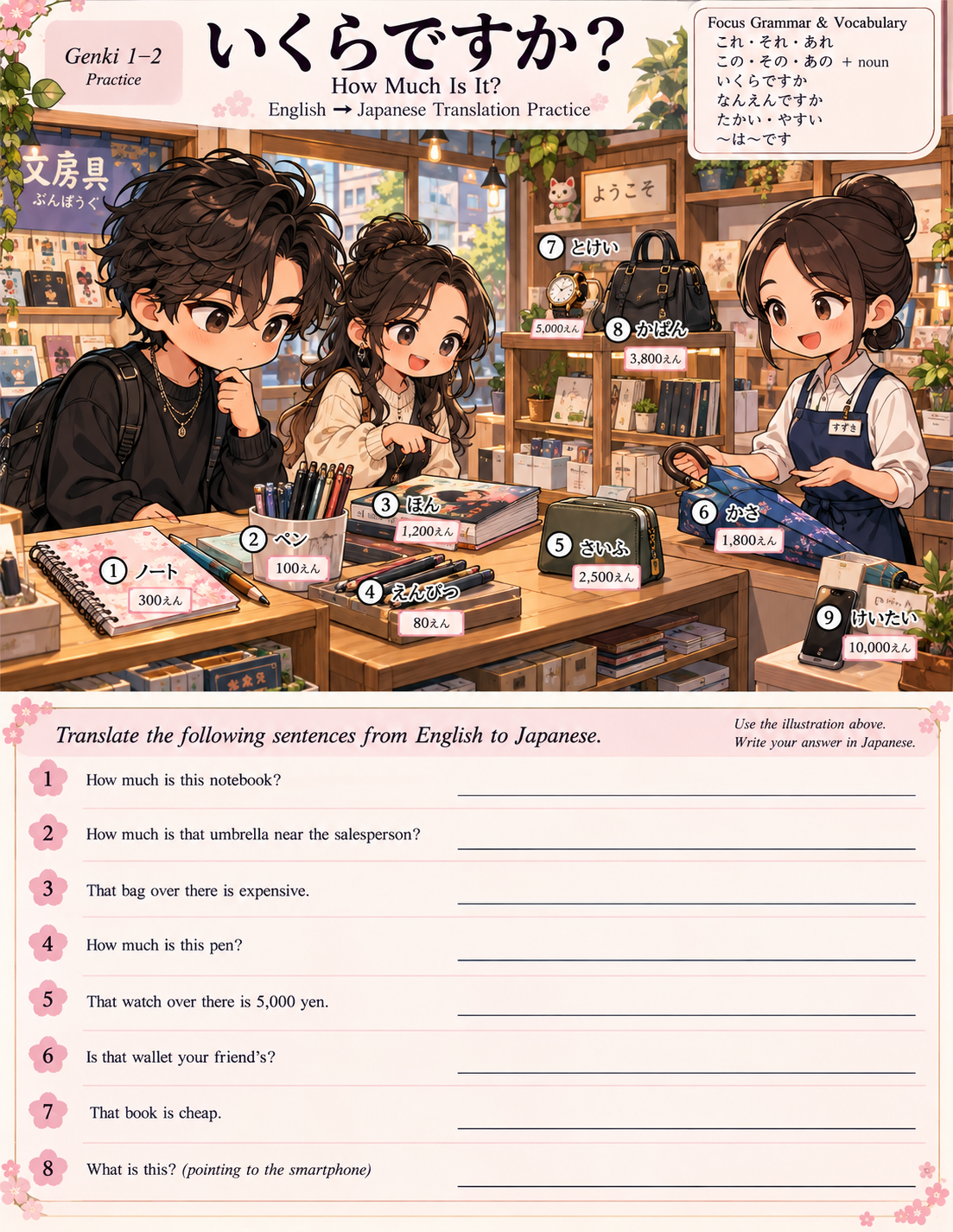
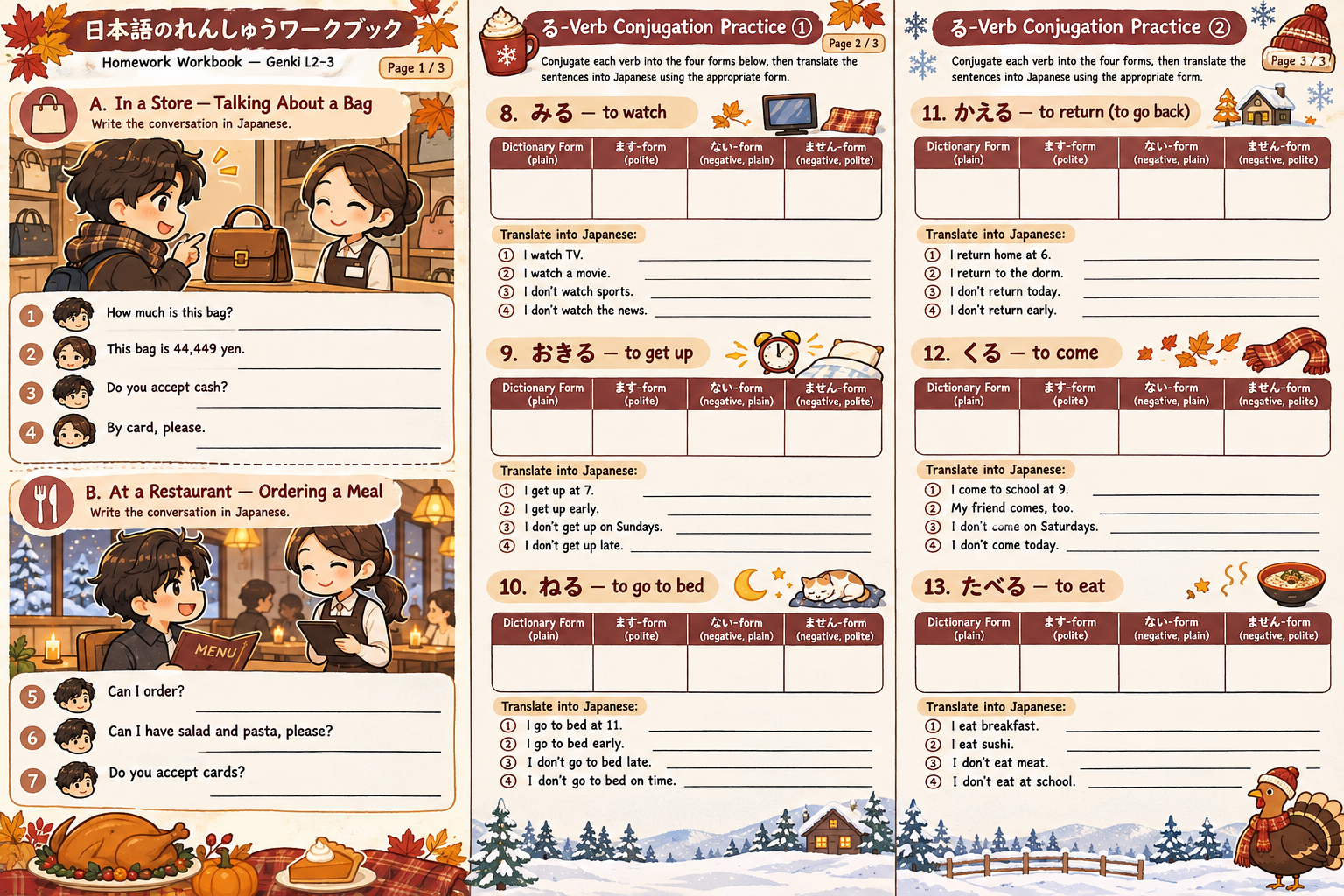
One of my favorite parts of studying is making the homework packets. I’ll pull a bit from Genki, add something Akiko and I worked on, and make up questions I’d actually like to answer. Sometimes the packet ends up looking like a manga workbook. Sometimes it looks like a Super Nintendo game. I have spent time deciding what a page about verb endings should look like, and I can tell you I enjoyed that time.
Then I open the packet on my iPad and write right on it. I like having an actual page to work through. I like seeing where I crossed something out and what I came up with the second time. Getting a Japanese keyboard set up made a difference, too. Now I can open OneNote and type a few lines about my day as easily as I’d open it to jot down anything else. Sometimes those few lines turn into a little story. Sometimes I spend the entire time on one sentence because I’ve decided I’m going to tell it the way I mean it.
Akiko has helped me do more with what I put on those pages. Take に and で. I’d seen the explanations, but she helped me work through why I’d use one to talk about going to the bathroom and the other to talk about brushing my teeth in it. We’ve used the same grammar to talk about shopping and playing Street Fighter. Sometimes I get halfway through a sentence now, hear that I’ve picked the wrong one, and fix it myself. The first few times that happened, I was almost as excited about catching the mistake as I was about finishing the sentence.
Some of my blank pages:
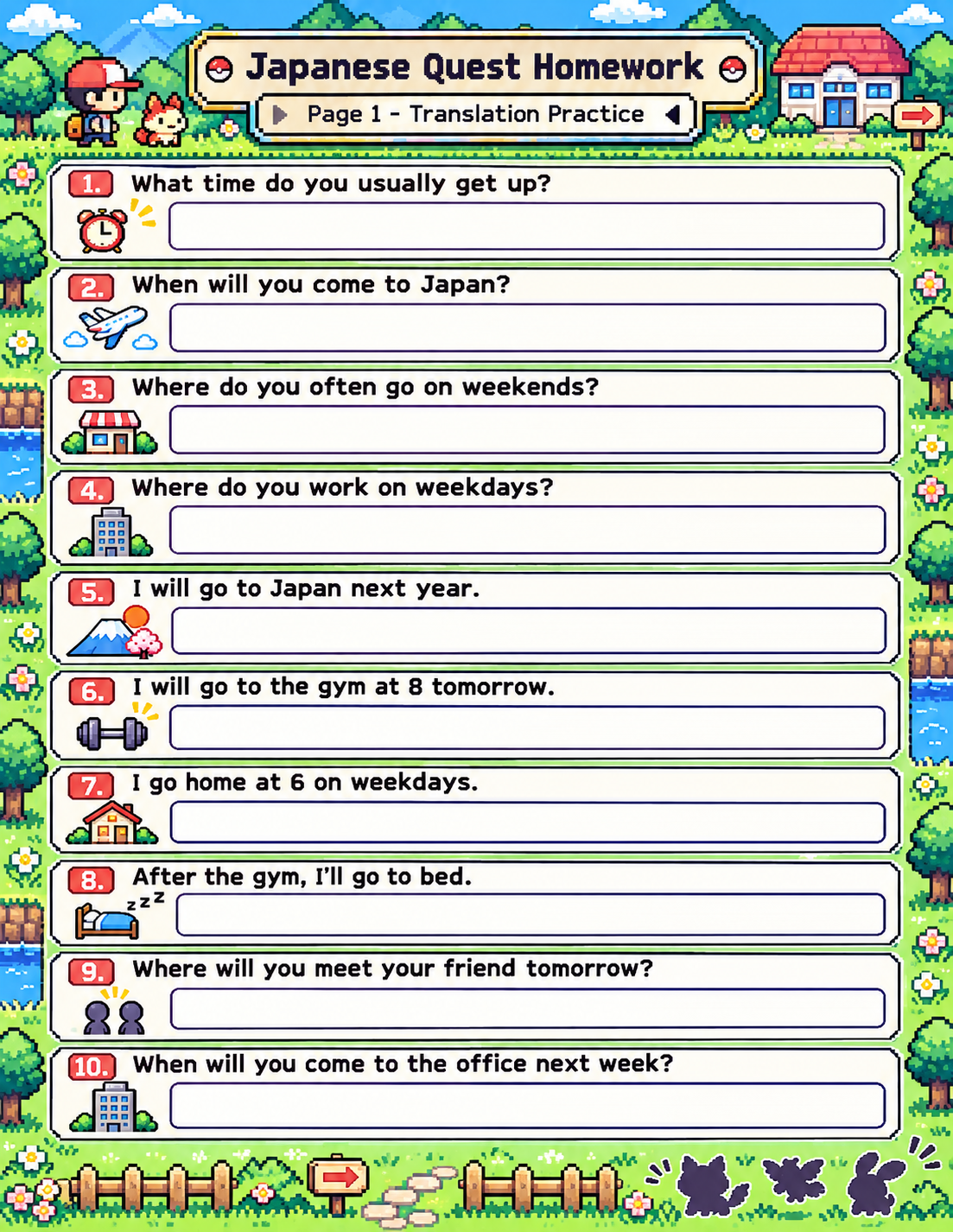
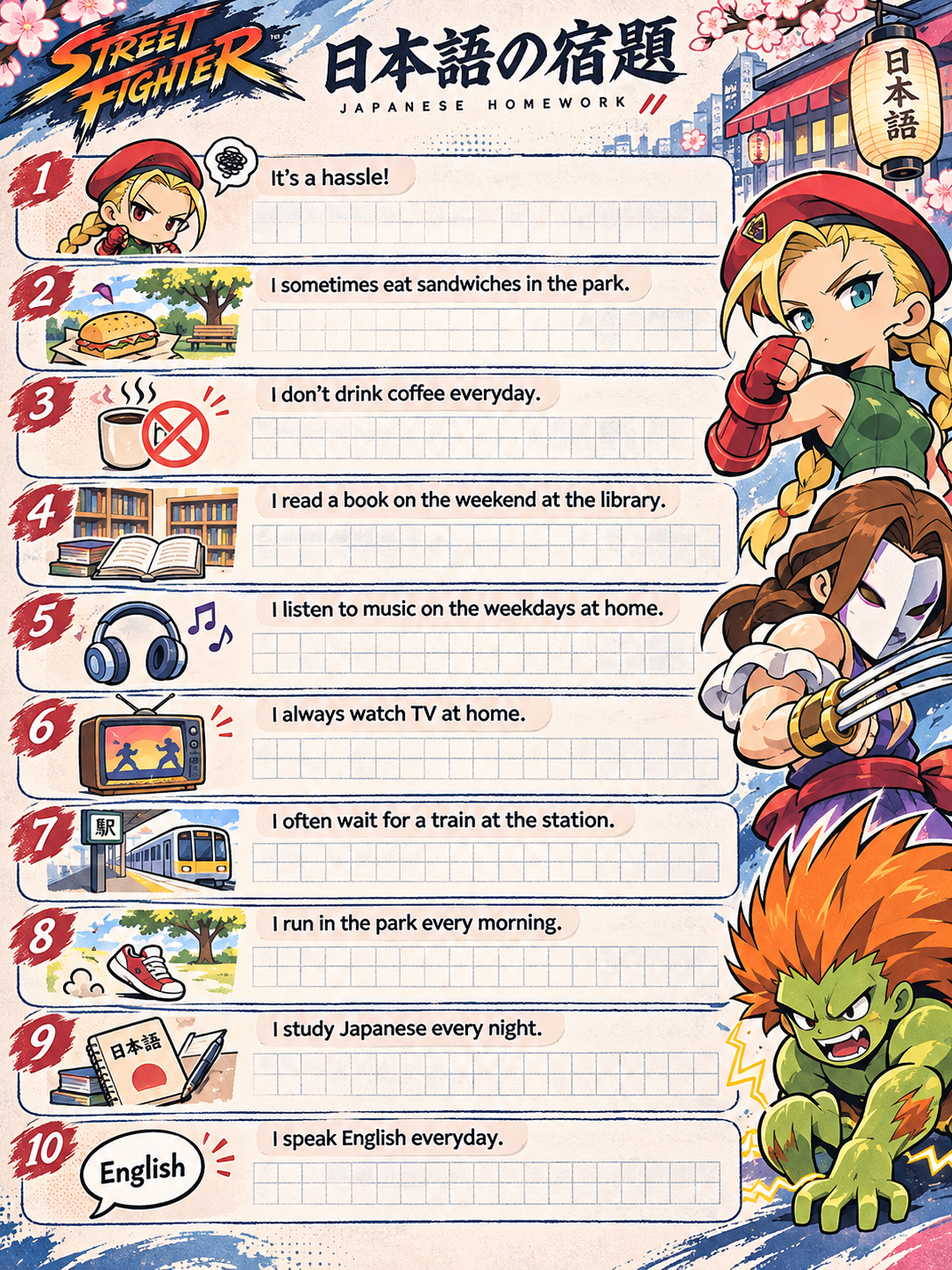
The soup was a big deal, actually
The other night it was cold and I wanted to make soup from my mom’s recipe. I wrote about it in Japanese. I could get the cold weather on the page, and the soup, and my mom. I got stuck on the part I most wanted to say. The soup makes me think of home.
I brought that to Akiko, and she helped me with omoidasu, the word for remembering something or having a memory come back to you. I went into our first lesson trying to tell her what time I woke up. Now I was bringing her something I’d written because I wanted to get the feeling right. I still needed her help, and I was proud of the draft I’d brought her. I’d gotten far enough to know exactly what I was trying to say.
I think that’s what I want to remember about 250 hours. I can read more than I ever thought I’d be able to. I make my own homework because I genuinely like doing it. I can ask a question, get an answer I didn’t expect, and sometimes come up with a follow-up. I’m a beginner who can do all of that. I’ve never been this kind of beginner before.
When I picture dinner with my host family in Japan, I think about the same ordinary stuff Akiko asked me in that first lesson. How was your day? What did you eat? What are you doing tomorrow? I want to be able to answer, ask them something back, and see where we end up. I’m really f—-cking proud of those little bits.
If you’re learning Japanese, I highly recommend using a tutor, especially Akiko. You can find her preply page here.