
Thought Leadership
AI, Identity & Strategy
I write from lived experience in strategy, identity, and AI. Generative AI helps refine clarity and validate data , but the voice and perspective are entirely my own.

Synthetic Consumers Will Rewire Product Development. But Only If They Can See Us.
Synthetic personas are about to change how companies test ideas, but the systems generating them still misread or erase LGBTQ and BIPOC consumers. When AI personas replace real users without identity-aware data, emotional metadata, and lived-experience signals, synthetic research becomes a closed loop built on omission. This piece lays out the risks, the systemic blind spots, and the strategic path toward synthetic consumers that reflect the real world instead of flattening it.
A Retail Lens on Design Sprint Academy’s AI Framework
Design Sprint Academy delivered one of the clearest AI frameworks I’ve seen. Their focus on structured decision making, guided facilitation, and rapid learning is powerful. Through a retail lens, the work becomes even more interesting. Retail has two customers, deep emotional dynamics, and identity shaped behaviors that must be understood from the first conversation. The result is a richer, more human way of framing AI value. Here is what I learned and how the framework expands inside a sector that never stops moving.

Elizabeth Taylor Showed Us What Real Leadership Looks Like
In the early days of the AIDS crisis, Elizabeth Taylor chose truth over safety and stood publicly with the gay community when the world demanded silence. This essay explores what she really did for Rock Hudson, why her voice changed history, and how her example shows us the kind of leadership we owe ourselves and each other.

Becoming Me: A Reintroduction
There are moments when your voice becomes impossible to ignore. This is the story of how pressure clarified my purpose, sharpened my leadership, and revealed the future I am built to lead in.

Role Design in the Age of AI
The modern workplace now moves at a velocity the human brain was never designed to sustain. Workloads accelerate. Expectations multiply.
Communication channels expand. And somewhere in all that speed, something quietly vanishes: Clarity.

Instacart Was Supposed to Die the Day Amazon Bought Whole Foods
When Amazon bought Whole Foods, everyone predicted Instacart’s collapse. Instead, the grocery industry spent years chasing the wrong infrastructure—and is now retreating from automation, robotics, and self-distribution. Instacart’s flexible, store-proximate model didn’t just survive; it became the design pattern grocers are returning to.

Before We Build Agents, We Need to Fix the Systems That Already Cannot See Us
AI doesn’t fail queer and BIPOC people because of “bias.” It fails because it cannot interpret our identities with accuracy, context, or cultural truth. This essay reveals the mechanisms behind that harm and introduces a new architecture to prevent identity collapse in the age of autonomous AI.

Finding Your Voice in the Age of AI
Most people use AI to write faster. I used it to learn who I was. Over the past year, writing with machines became a mirror that stripped away the noise, surfaced my patterns, and revealed a voice I didn’t know I had.

The Problem Amazon Doesn’t Know It Has
Amazon doesn’t have a convenience problem.
it doesn’t have a speed problem.
It doesn’t have an assortment problem.
Amazon has a discernment problem.
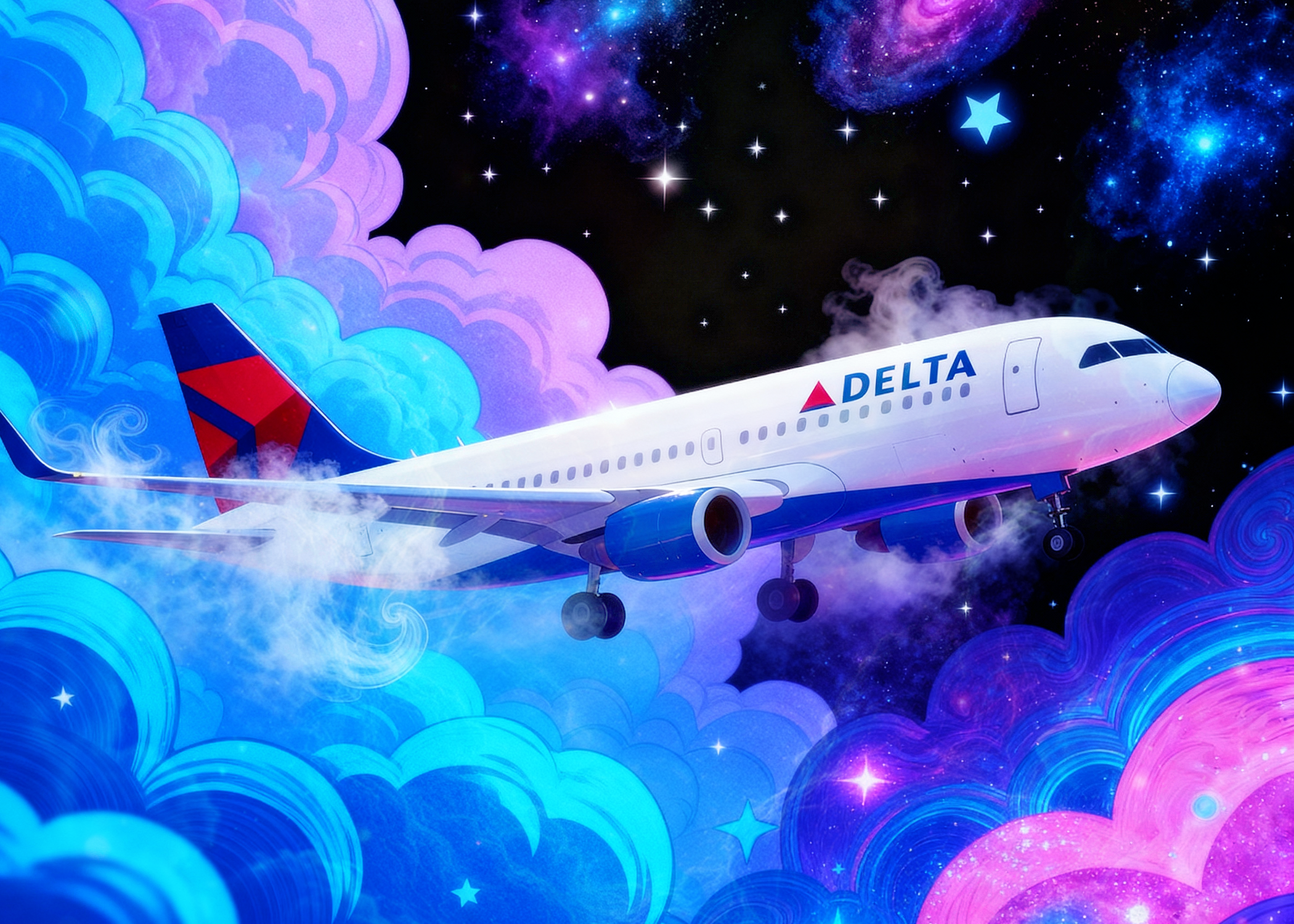
Prediction Isn’t Perception: Why Delta’s Automation Is Failing the Human Traveler
People don’t remember flawless. They remember feeling seen.
They remember the human who made the stress smaller, the journey lighter, the moment calmer. They remember the person who didn’t just process them, but acknowledged them.
Travel, at its core, is a human ritual. It is migration, reunion, escape, reinvention, obligation, hope. And any airline that forgets that truth — even unintentionally — begins to lose the one thing technology can’t replicate: emotional resonance.